
What Is a Boiler and Heating System Upgrade?
A boiler and heating system upgrade replaces an old, inefficient or unreliable boiler with a modern condensing model and brings the parts around it up to date at the same time — the controls, the hot water arrangement, the system water and the protection that keeps the new boiler healthy. It differs from a straight like-for-like swap because the engineer looks at whether the existing type of boiler still suits the household before choosing what goes back on the wall.
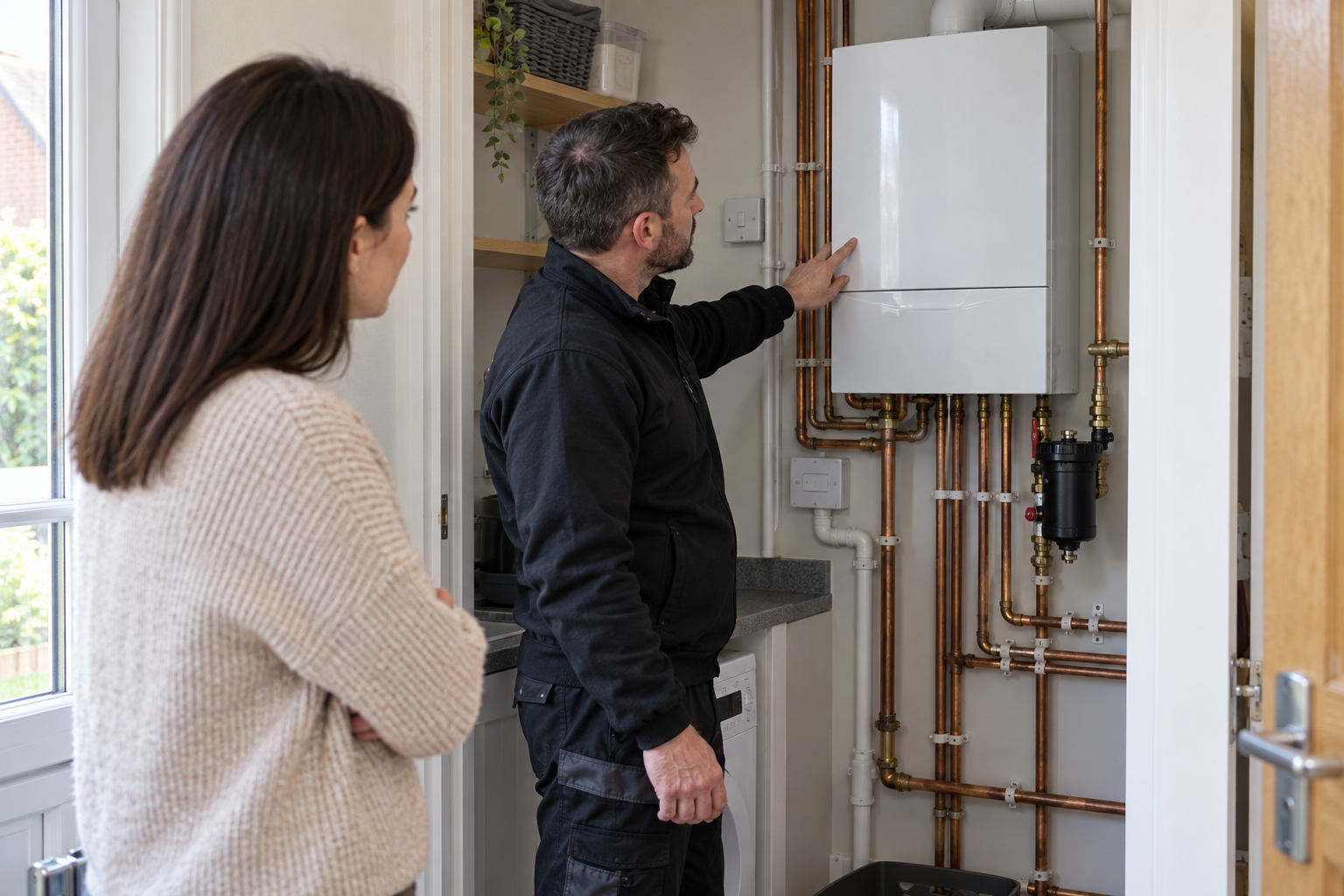
Most upgrades are prompted by a boiler that has started breaking down every winter, parts that are no longer made, or a non-condensing boiler from the 1990s or early 2000s that burns far more gas than it needs to. Others happen alongside a bathroom refit or a loft conversion, when the existing system can no longer supply enough hot water.
Signs Your Boiler and Heating Need Upgrading
- The boiler is more than 12–15 years old and has needed repeated call-outs
- Your engineer has said spare parts for the model are obsolete or hard to find
- It has a permanent pilot light or no condensate pipe, meaning it is a non-condensing boiler
- Hot water runs out or drops in temperature when two taps or showers are used together
- The only control is a mechanical timer and a single thermostat dial
- The boiler makes kettling or banging noises that a repair hasn't cured
A non-condensing boiler can waste a noticeable share of the gas it burns up the flue, so even a reliable old boiler may be costing you money every month it stays on the wall.
Upgrade Options Explained
The right upgrade depends on how many bathrooms you have, how much hot water you use and what your current system looks like:
- Combi boiler — heats water on demand straight from the mains, with no cylinder or loft tanks. Ideal for flats and smaller homes with one bathroom; less suited to homes where several showers run at once.
- System boiler with unvented cylinder — stores hot water at mains pressure, giving strong showers in several bathrooms at once. Needs space for a cylinder and an installer qualified to fit unvented cylinders.
- Regular (heat-only) boiler — keeps the existing tanks and vented cylinder. Often the simplest choice for older homes with low-pressure mains water or original gravity-fed pipework.
- Controls and efficiency add-ons — in England, a new combi must be installed with an extra efficiency measure such as weather compensation, load compensation, smart controls with automation and optimisation, or flue gas heat recovery. Thermostatic radiator valves should also be added where reasonably practical.
Converting from a regular system to a combi frees up the airing cupboard and loft, but it involves more pipework changes and should only be done if your mains water pressure and flow rate are good enough to support it.
What to Include When Asking for a Quote
Give the engineer the make and model of the current boiler and tell them whether there is a cylinder and loft tanks. Describe how the household uses hot water — the number of bathrooms, whether anyone runs a bath while someone else showers, and whether you have had problems with pressure. If you would like the boiler moved, say so at the start, because relocating it changes the flue route, the gas pipe size and the condensate run.
A good upgrade quote names the exact boiler and its kW output, explains why that type and size suit your home, and states whether the system will be power flushed or chemically cleaned before the new boiler is connected. It should list the magnetic filter, inhibitor, controls and any cylinder separately, and confirm that gas pipework will be checked for the correct diameter — older 15mm gas runs often need upsizing for a modern combi.
Check that the quote includes building regulations notification through the Gas Safe Register, Benchmark commissioning and registration of the manufacturer's warranty, and ask what the warranty requires of you, since most depend on an annual service.
How Much Does a Boiler and Heating Upgrade Cost?
| Type of upgrade | Typical cost |
|---|---|
| Combi-to-combi upgrade with new controls and filter | £2,200 – £3,200 |
| Regular or system boiler upgrade, existing cylinder kept | £3,000 – £4,200 |
| Combi conversion or system boiler with new unvented cylinder | £4,000 – £5,500+ |
Prices vary with the boiler brand, warranty length, flue position and how much pipework needs altering. A survey is the only way to get a firm figure.
The Upgrade Process: What to Expect
- Survey. The engineer checks the existing boiler, flue, gas meter and pipe sizes, mains water pressure and flow, and the condition of the system water.
- Recommendation and quote. You receive a written proposal naming the boiler type and size, controls and any cylinder or pipework changes.
- Draining and cleaning. The system is drained and, where needed, power flushed or chemically cleaned.
- Removal and installation. The old boiler comes out, the new one and its flue are fitted, and gas, water and condensate connections are made.
- Commissioning. The engineer checks gas rate and combustion, fills the system with inhibitor, sets up controls and completes the Benchmark checklist.
- Handover and notification. You are shown how to use the controls, and the installation is notified to building control via Gas Safe.
Planning Permission and Building Regulations
Replacing a boiler doesn't normally need planning permission, although a new flue on the front elevation of a listed building or a property in a conservation area may need consent. Boiler installation is notifiable building work under the Building Regulations, covering energy efficiency (Approved Document L) and safe combustion and flues (Part J). A Gas Safe registered engineer can self-certify the work, and you should receive a Building Regulations Compliance Certificate by post within a few weeks. If an unvented cylinder is fitted, the installer must also be qualified to do so under Part G.
How to Choose an Engineer for Your Upgrade
- Check their Gas Safe registration and that it covers boilers on the Gas Safe Register
- Ask how they decided on the boiler type and kW output for your home
- Confirm whether a power flush or chemical clean is included
- Ask whether they are an accredited installer for the brand, which can extend the warranty
- Check whether removal of old tanks and cylinders and making good are priced in
- Compare at least three written quotes for the same specification
Frequently Asked Questions
Is it worth upgrading a boiler that still works?
Often, yes, if it is a non-condensing model or more than 15 years old. A modern condensing boiler with good controls can use noticeably less gas, and replacing it on your own schedule avoids an emergency replacement in the middle of winter.
Should I switch to a combi boiler?
A combi suits homes with one bathroom and good mains water pressure. Homes with two or more bathrooms used at the same time are usually better served by a system boiler and unvented cylinder.
Can I get a government grant to upgrade my gas boiler?
The Boiler Upgrade Scheme only funds heat pumps and some biomass boilers, not new gas boilers. Some low-income households may qualify for help through local council or energy supplier schemes, so it is worth checking what is currently available in your area.
How much does a boiler and heating upgrade cost?
Most upgrades cost between £2,200 and £5,500. A straightforward combi swap with new controls sits at the lower end, while a conversion or a new unvented cylinder pushes the price towards the top.