
What Is Radiator Replacement and Installation?
Radiator replacement and installation covers taking out existing radiators and fitting new ones, adding radiators where there were none, and moving radiators to new positions. It ranges from a single like-for-like swap in an afternoon to replacing every radiator in the house with larger or more efficient models, and it is one of the most effective ways to fix a room that never gets warm enough.
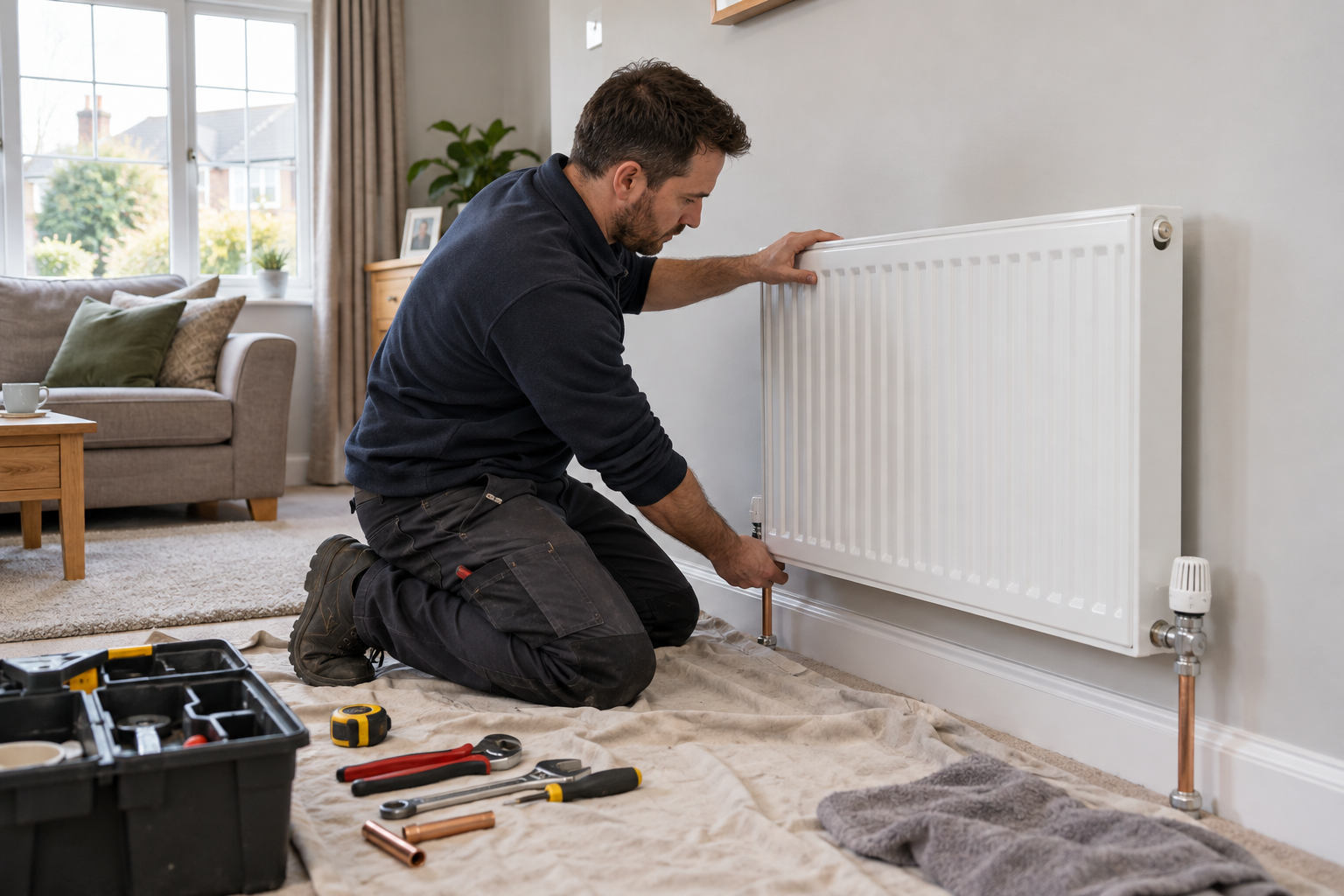
It is typically requested when a radiator has started to weep or rust through, when a room has been extended or knocked through and the old radiator can no longer cope, or as part of a kitchen, bathroom or living room refit where a different style or position is wanted.
Signs You Need New Radiators
- Rust spots, pinhole leaks or weeping around the seams or valve connections
- Cold patches in the middle of the panel that remain after bleeding and flushing
- A room that stays cold even with the radiator fully on and the boiler running well
- Radiators that are too small since walls were knocked through or an extension added
- Old valves that are seized, leaking or have no thermostatic control
- A planned switch to low-temperature heating, which needs larger radiators
Radiator Types and Options Explained
- Steel panel radiators — the standard white radiator, sold as single, double or double convector (Type 11, 21, 22 and 33). Adding a second panel or extra fins raises output without a bigger footprint on the wall.
- Column radiators — traditional cast-iron style or modern steel columns. They suit period homes but cost more and need careful sizing, as output varies widely between models.
- Vertical and designer radiators — tall, narrow radiators for rooms with limited wall space below windows. Their output per metre of wall can be lower, so check the figures.
- Heated towel rails — for bathrooms, either plumbed into the heating, electric, or dual-fuel so they work in summer.
- Low-temperature or heat pump-ready radiators — larger or fan-assisted models designed to heat a room with cooler water from a heat pump or a weather-compensated boiler.
Every radiator is rated by heat output, usually at "Delta T50". If your system runs cooler than that, the real output will be lower, which is why a radiator that matches the old one on paper can still leave a room cold.
What to Include When Asking for a Quote
For each radiator, give the room it is in, the room's rough dimensions, the current radiator's width and height, and the distance between the two pipe connections at the floor (the pipe centres). If the new radiator matches those pipe centres, the swap is quick; if it doesn't, the pipes have to be altered, which adds labour and may mean lifting floorboards.
Say whether you want like-for-like replacements or more heat, and whether you are thinking of a heat pump in future, because that changes the sizes an engineer should recommend. Mention the floor type under the radiators and whether pipes come up from below or run along the wall.
The quote should list each radiator model and its rated output, the valves and thermostatic radiator valves (TRVs) being fitted, how the system will be drained down and refilled with inhibitor, and whether the old radiators are taken away. If several radiators are being replaced, ask whether a power flush is recommended first so sludge from the old system doesn't settle in the new ones.
How Much Does Radiator Replacement Cost?
| Job | Typical cost |
|---|---|
| Single like-for-like panel radiator swap | £200 – £400 |
| New radiator in a new position, including pipework | £350 – £700 |
| Several radiators or column radiators replaced | £800 – £1,500+ |
Designer and column radiators can cost several hundred pounds each before fitting, so the radiator choice often moves the price more than the labour does.
The Radiator Replacement Process: What to Expect
- Sizing. The engineer measures the room and checks the heat output each radiator needs.
- Draining down. The system, or just the affected radiators, is isolated and drained.
- Removal. Old radiators and brackets are taken off, catching dirty system water.
- Pipework alterations. Tails are adjusted or new pipe runs installed if positions or pipe centres change.
- Fitting. New brackets, radiators, valves and TRVs are fitted.
- Refill and balance. The system is refilled with inhibitor, bled, pressurised and balanced so each radiator heats evenly.
Planning Permission and Building Regulations
Replacing or adding radiators doesn't need planning permission. A like-for-like radiator swap isn't notifiable building work, but in England, when a heating system is extended or a boiler is replaced, thermostatic radiator valves or other room-by-room temperature controls should be fitted where reasonably practicable under Approved Document L. Work in a listed building that affects historic fabric, such as removing original cast-iron radiators, may need listed building consent.
How to Choose a Radiator Installer
- Ask how they calculated the output needed for each room
- Check whether pipe alterations are included or priced separately
- Confirm TRVs are included and that the system will be refilled with inhibitor
- Ask whether they will balance the whole system afterwards
- Check who supplies the radiators and the warranty that comes with them
Frequently Asked Questions
Can I replace a radiator without draining the whole system?
Often yes. By closing the valves on each side, an engineer can remove a single radiator and only drain that radiator. Moving pipework or replacing valves usually means draining down at least part of the system.
Will a bigger radiator make my room warmer?
If the boiler and pipework can supply it, yes. A radiator with higher rated output delivers more heat at the same water temperature. If the room is cold because of sludge or poor balancing, a flush or balancing may help more than a bigger radiator.
Do I need a Gas Safe engineer to fit a radiator?
No. Radiators are part of the water side of the heating system, so a competent plumber can fit them. Many homeowners use a Gas Safe heating engineer anyway, especially if the boiler pressure or controls also need attention.
How much does it cost to replace a radiator?
A single like-for-like panel radiator swap usually costs £200 to £400 fitted. Jobs involving new pipework, several radiators or designer models typically range up to £1,500 or more.