
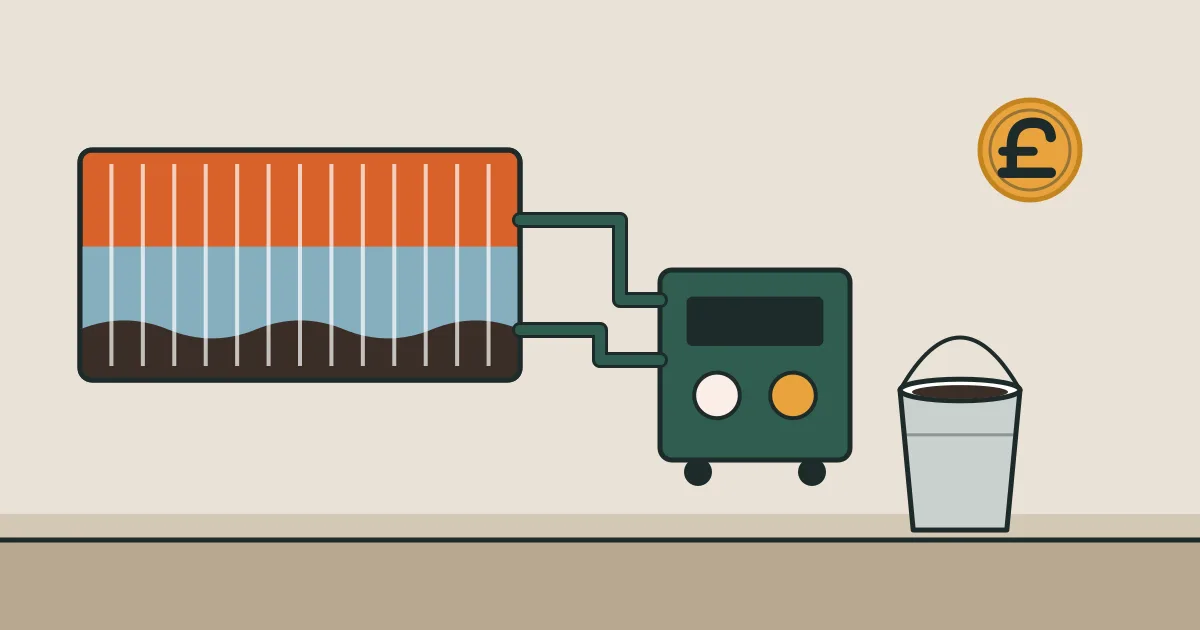
Most three bedroom houses pay £400 to £550 for a power flush. The power flush cost runs from about £300 for a flat to £700 for a large home, and it depends mainly on how many radiators you have and how much sludge is inside them. The job itself is explained on our power flushing page.
Power flush cost by system size
Typical UK power flushing costs by system size
| Job size | What it usually covers | Typical cost |
|---|---|---|
| Small | Flat or small house, up to 6 radiators | £300–£400 |
| Typical | 3 bedroom house, 8 to 10 radiators | £400–£550 |
| Large | 12 or more radiators, with a magnetic filter fitted | £550–£700+ |
A magnetic filter usually costs extra if you do not have one. Engineers price valves or radiators that fail during the flush separately.
What you are paying for in a power flush
The engineer connects a flushing pump to the circuit and pushes cleaning chemical and water through at high flow, reversing direction to shift sludge. Next they flush each radiator in turn until the water runs clear, then refill the system with inhibitor. A full quote should state each of these steps, and most homes take a day.
What changes the power flush cost
- Radiator count. More radiators mean more time isolating and flushing each one.
- Level of contamination. A heavily sludged system takes longer and needs more chemical.
- Access. Radiators behind furniture, or in lofts and conservatories, add time.
- Filter. If a magnetic filter is fitted at the same time, it appears on the quote as a separate line.
- Testing. Some engineers test the water before and after and give you a record, which can matter for a boiler warranty.
- Valves. Seized valves often need replacing, because they will not shut off for flushing.
Very old radiators and weak joints may leak once the sludge that was blocking the holes is gone. A gentler chemical clean is sometimes safer. Ask the engineer to explain why they recommend one method over the other.
Power flush or something cheaper?
A chemical clean using the system's own pump is gentler and cheaper, but it will not shift heavy deposits. A power flush costs more but copes better with a badly clogged circuit. If you are fitting a new boiler, BS 7593 recommends the system is cleaned and treated, and manufacturers often expect it for the warranty. A later guide on whether you need a power flush covers the choice in depth. Our central heating problems explained guide shows the symptoms that point to sludge.
Combining a flush with other work
If you are replacing radiators as well, flush first, so the new ones do not fill with old sludge. The radiator replacement cost guide explains that side of the budget. When a flush forms part of a new boiler installation, the engineer should record it on the commissioning paperwork.
Getting a fair power flush quote
Ask whether each radiator gets flushed on its own, which chemicals the engineer uses, and whether inhibitor and a filter are included. Compare two or three written quotes, and check Gas Safe registration on the Gas Safe Register if the boiler or its pump will be touched. The heating cost calculator gives a budget range for the wider job.
Frequently asked questions
How much does a power flush cost?
As a guide, £300 to £400 for a flat or small house, £400 to £550 for a three bedroom home and £550 to £700 or more for a larger system.
How long does a power flush take?
Most take five to eight hours, depending on the number of radiators and how dirty the system is.
Can a power flush damage my radiators?
It does not cause damage, but it can reveal it. A radiator already corroded through may start leaking once the sludge has gone.
Is a power flush worth the money?
It can be, if radiators are cold at the bottom or the water is black. If the system is clean, you are better off spending on a filter and inhibitor.
Ready to talk to a power flushing specialist?
Get Free Quotes →